

My writings - and those of others.

In a lighter seasonal vein

T’was a night during Covid, when all through the state
Statistics were rising, the news was not great.
The face masks were hung by the front door with care,
In hopes that the virus would not soon be there
The ICUs filled up with folks in their beds,
With visions of long-term disruption in heads.
With hand sanitizer, not touching my face,
and nary an option for hugs in this place
Out on the lawn there arose such a clatter,
I sprang to the front door to view all the matter.
Away to the doorstep I flew like a flash,
Opened the front door and hoped for some cash.
The Liberals on breast of the new-fallen snow
Gave promise at mid-day to dollars below,
But what to my wondering eyes should appear,
But the DoorDash attendant with restaurant beer,
And an Instacart messenger dragging a cart
(I knew in a moment my tips had been smart).
More rapid than eagles the groceries came,
And we named all the heroes and villains by name
Yay, Trudeau! yay, Theresa! yay, Deena, yay Rerx
Yay Fauci, Yay Sangay! Boo Anti-Vax Jerks.
Leave stuff on the porch! Six feet from the wall
Now dash away! dash away! dash away all!"
As dry throats, that before the new virus comes on
When they meet with a test are immediately gone
So up to the house-top the droplets they flew,
To infect a new household with Covid to rue
But then, in a twinkling, I heard on the air
From CBC, NBC ways to repair!
As I rolled up my sleeve, and was turning around,
Moderna attendant came in with a bound.
She was dressed all in Hazmat, from head to her toes,
With vaccine in hand to attend to my woes.
A bundle of vials she had flung on the table,
To use on my arm quite as quickly as able
My eyes -- how they shut fast! My arm it was bare
To welcome the vaccine, about to go there.
My droll little mouth was drawn up with a wince
Bur heart with more hope than we hadn’t had since
The virus descended in March of this year
As we sheltered in place with a sense of new fear
The virus was scary and full of infection
That senators said there should be no election
Instead, the politicos offered a CERB
Since then, the word “pay back” is now the new verb.
Health officers all became the new stars
And most public transport gave way to our cars.
We baked, we did puzzles, we Netlixed to death
And hoped we’d live through this before our last breath
We watched anti-vaccers with moments of dread
Like POTUS, they thought it was all in the head
He was chubby and plump, a right dangerous elf,
And he did lose the White House because of himself.
A wink of his eye and a twist of his head,
Soon gave us to live in perpetual dread;
He Twittered a lot, but went naught to his work,
And spouted conspiracies. Then as a jerk,
And laying his finger aside of his nose,
And giving a nod, up to pardons he rose;
He sprang to his plane, to his team gave a wave,
And we hoped he was heading quite soon for a grave.
But we heard him exclaim, ere he drove out of sight,
Leave the Covid to Joe - and he’ll soon get it right!
New Books a New Era

A new administration in the US has meant that new roadmaps are being developed - and not a moment too soon. Visit Yale Climate Connections writer Michael Svoboda to learn more about these new books that will help us all move forward. You can find reviews of the books here.
Solstice - A Universe Birthday

This is the solstice, the still point of the Sun . . .
where the past lets go of and becomes the future; the place of caught breath.
— Margaret Atwood
The Canadian poet and novelist kicks off the site of the Deep Time Network, a place that celebrates the larger creation story than the one usually told in European traditions and the countries that emerged from it. The Christmas ritual relates to it in terms of timing.
As the Network site notes,
“From time immemorial, humans have honored the winter and summer solstices, as sacred and rich times, to align our personal and collective lives with the movement of celestial bodies. Some of us are heading into the darkness of winter while others are headed into summer and longer days. Wherever you are, the solstice is a planetary event.”
A solstice occurs when the Sun reaches its most northerly or southerly excursion relative to the equator. Two solstices occur annually, around June 21 and December 21.
The term solstice can also be used in a broader sense, as the day when this event occurs. The day of a solstice in both hemispheres has either the most sunlight of the year (summer solstice) or the least sunlight of the year (winter solstice) for any place other than the Equator, where the days and nights are equal in length all through the year.
The word solstice is derived from the Latin sol (“sun”) and sistere (“to stand still”), because at the solstices, the Sun appears to “stand still”; that is, the seasonal movement of the Sun’s daily path (as seen from Earth) pauses at a northern or southern limit before reversing direction.
And this year there is an added bonus, if you are in a location with a clear night. There are likely to be meteor showers but there is also the best chance in 400 years to see two planets, Jupiter and Saturn, appear closer than usual – not that they are actually close to us. Saturn is 1.6 billion km. from earth, while Jupiter is about 885 million away. They appear to meet in the night sky. The last time this happened so visibly was in 1623. Binoculars may make it visible in the south west sky just around sun down. Through right now, and for the rest of December, they will appear to be super-close in the post-sunset night sky.
And though it’s a shorter interval, the great Cathedral of St. John the Divine in New York City has celebrated the solstice for the past 41 years with a performance by the famed Paul Winter consort. I sang in the chorus when they came to Toronto for a performance of the Missa Gaia in 1989 and it still happened again this year at the Cathedral. NPR offers a reprise of the 2019 concert and you can listen and watch excerpts of it here..
Anti or Not?

Words matter and how we use them causes confusion. I was struck by how this works after recently finishing the book, How to Be an Anti-Racist by Ibram X Kendi. It made a much deeper impression than Robin Diangelo’s White Fragility. What both deal with at length is denial, something that Canadians as well as Americans must come to terms with, both in their roles as settlers who felt they had the right to steal lands inhabited for thousands of years by first nations people. While slavery is not as large a part of our history as that of our neighbors to the south, we are not innocent in systemic racism in Canada. Kendi’s book helps us cut through our denial.
Kendi, an author, professor, anti-racist activist, and historian of race and discriminatory policy in America, recently assumed the position of director of the Center for Antiracist Research at Boston University. His book combines his own upbringing and development as a memoire while also making clear argument about the distinction between “not a racist” and “anti-racist”. It’s not hard to cite the example of a former president, who after delivering unsavory remarks about some citizens of Baltimore then stated he was the least racist person in the world. Our own gut reaction is to say, “Well at least I’m not a racist”. Kendi’ book is a history of his own journey from racist to anti-racist. He says he used to be a racist most of the time. He no longer claims to be “not racist.
What is an anti-racist? He starts with two basic definitions:
Racist: one who is supporting a racist policy through their actions or inactions or expressing a racist idea.
Anti-racist: one who is supporting an anti-racist policy through their actions or expressing an anti-racist idea.
Subsequent chapters take us through historical patterns. Assimilation results when one group suggests that another group is culturally inferior or behaves badly, and thus needs to be improved. Its opposite, segregation, suggests that one group will never improve and therefore should be segregated. An anti-racist idea is that all groups are equal. He characterizes these opposites as dueling consciousnesses.
He calls race a power construct with false historical roots, including differences in biology, In early childhood, his teacher assumed that his behaviour was bad and suggested that he should behave like an adult. The converse is that many black adults have been treated as children unable to reach maturity. The bible starts with the notion that all are equal and then puts a curse on Ham who will forever be a slave. Ethnicity also enters the picture with notions of group characteristics. Some bodies have been characterized as more animal-like or violent. Some group’s cultures are denigrated as not being really sophisticated. A bad individual becomes the poster child for the whole group. Colour has created hierarchies within the groups themselves – including both blacks and whites. We ascribe divisions within class, space, gender and sexuality. Racism is always present and it is subconscious. To support his argument, Kendi relates amazing stories from his own life to illustrate it. The task for all of us is to bring it into consciousness.
The struggle is to be fully human and also to see others as equally fully human. The focus has to be on power – not on groups of people – and on changing policy not on changing groups of people. It has to start with a recognition that we know and admit that such policies are wrong. What are policies that suggest certain groups of people are more dangerous or violent or mentally challenged than others? How can policies that support such ideas be upended? How can pledges for diversity be replaced by policies for diversity? How can stereotypes based on one person – “black angry woman” be demolished as applied to any group?
In a recent talk, Kendi cited the book’s chapter called “Failure” as the most important one in the book. He says that to understand failure to remove racism is related to failed solutions and strategies – and that the cradle of these lies in failed racial ideologies.
These are not social constructs. They are power constructs. Current solutions offered to us when we feel bad or sad include reading a book, donating to a cause or marching a time or two. But as soon as we do that we feel better – oscillating between feeling bad and feeling good means that generally we do nothing at all.
It’s not a sequential march toward progress. It’s a back and forth pattern. It’s not saying “I’m not racist”. It’s admitting, “I am racist and starting to act in a different way”. It’s not hearing stories and feeling sad about miserable mistreatment of others. It’s about attacking policies in any place and at any level where we have agency. Education may help individuals but it may not affect groups.
Resistance does work – it takes a long time, but it has to be constant and focus on ideas and policies. There are two such policies I learned about in the morning paper that require my resistance. An app to promote cheating is being used in a local university. It does not recognize black faces. Whatever its merits in stopping cheating, it has to go. A first nations community in the north is worrying that the vaccine is not on its way to them fast enough because of small population density, even though their caseload of Covid-19 is much too high. I can send an email to a policy maker re both situations. It’s paltry as an action. But I now know about ways to start being an anti-racist – and I can begin. Read this book.
Postscript: I did send an email to the federal director of indigenous services, after finding him on the government website. I was thanked for writing almost immediately and my short request to act was copied to three other persons in the department. No reply from the province on the cheating app yet.
Beyond Belief
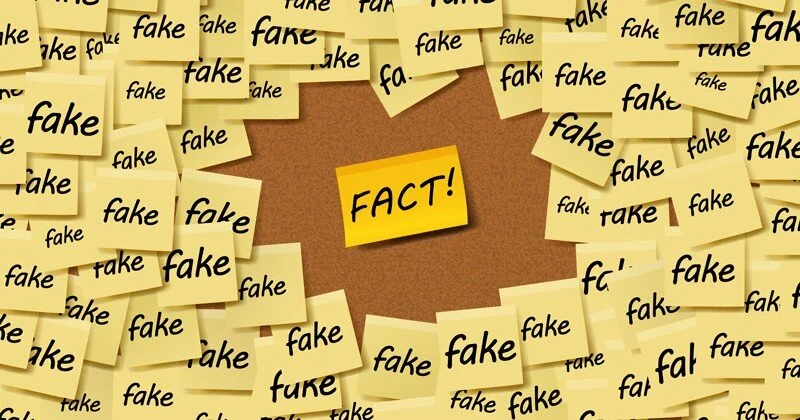
I’m curious how people become immersed in conspiracy theories – whether in large situations like the American election – or small ones like an unwelcome change in an organization. I was therefore pleased when the New York Times columnist tackled the subject in a recent column. One of the benefits of the Times is its continuing support of columnists with both liberal and conservative biases. I was thus more than casually interested in how Ross Douthat would frame this.
He first debunked the notion that the theories come solely from the supply side – social media and biased press and cable networks. It’s not the fault of a top-down power base. There is a demand from the bottom up to support an already existing belief. He goes on to describe three mindsets that move participants in the direction of conspiracy theories that make sense. I wish he had spent more time on the hero worship of celebrity, but perhaps he will do so in the future.
The first group he describes are the “Conspiracy Curious Normies”. These are not diehards but people who see the lack of transparency in government and institutions all the time and wonder what’s behind the curtain of official secrecy. The lack of detail can arouse a reasonable skepticism. Politics, of course, encourages this. The party not in power plays the role of official opposition – seldom a loyal one - and the task is to uncover the “there there”.
The second group are the “Outsider Intellectuals”. Such persons, usually with more than a modicum of formal education, place much of their identity on questioning everything. Sometimes, of course, they get it right. Because much of the discourse is sincere and now happens in social media, others are quick to pick it up and reinforce it. Any person has the power to gain a following in no time – as Kevin Ashton proved with his fictional consultant, Santiago Swallow and his 85,000 followers. This is a cautionary tale relating to celebrity culture – but it also shows how the faux outside intellectual can dupe us.
The last group Douthat identifies are the “Recently Radicalized”. To some extent they are the creatures of the pandemic. Lockdown has had an effect in my own family where teenagers are studying online while all their parents work from home and an older grandson was hired immediately after graduating from university. Another son teaches graduate students online in Hong Kong. I’ll add myself to make ten people all functioning with their own technology at an optimal level. How common is that? The contrast of impoverished inner city or rural families in any country is staggering. It is an invitation to mistrust authority. Added to that are unusual events – racial unrest, natural disasters and it reinforces the belief that no one is in charge – and that any who are attempting to be – those who talk about resets – are simply moving to take advantage of the situation and are out to get us.
Douthat concludes that there is more reason here that we are willing to give credit to. The easy thing is to mock it and laugh it away. The more responsible thing is to ponder ways to rebut it.
For the first group, the conspiracy curious, Douthat suggests avoiding the media coverage and going directly to the sources. If claims are being made in court, what are the lawyers saying to make their case? If it is legislation, what does the proposed bill say? If there is lack of transparency, what can be revealed and what is reasonable to withhold and redact?
For the outsider intellectuals, Douthat suggests that they take a breath and recognize that anomalies might be simple errors rather than dastardly plots. For the recently radicalized, pandemics do create chaos and ascribing mistakes as overreaching attempts to mislead are unfair. People do get things wrong because they are human and respond in various ways. If it appears that no one is in charge, it might be due to complexity of the reaction rather than autocracy.
In the long run what we need to focus on is law making – not story telling.