My writings - and those of others.

Insights and a Question

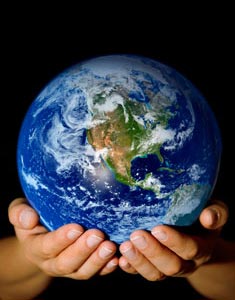
I’m quoting from Matthew Fox today as he examines the need for a sense of the sacred - and contends that the opposite of evil is not good - it’s the sense of the sacred. For a renewed discovery of the sacred, he turns to the astronauts - whose experience, he says turns them into cosmonauts.
“That beautiful, warm, living object looked so fragile, so delicate, that if you touched it with a finger it would crumble and fall apart.” James Irwin, Apollo mission.
"On the return trip home, gazing through 240,000 miles of space toward the stars and the planet from which I had come, I suddenly experienced the universe as intelligent, loving, harmonious. . . "My view of our planet was a glimpse of divinity." - Edgar Mitchell, the Moon landing
And here was a statement from Russian cosmonaut Boris Volynov:
“During a space flight, the psyche of each astronaut is reshaped. Having seen the sun, the stars, and our planet, you become more full of life, softer. You begin to look at all living things with great trepidation and you begin to be more kind and patient with the people around you. At any rate, that is what happened to me.”
Matthew Fox then asks: What would it mean if these testimonies from space truly coursed through decision-makers in various countries from which they come?

What indeed!
The Time has Come

Strong words from the Secretary-General of the United Nations, António Guterres, about the latest document from the International Panel on Climate Change. “an atlas of human suffering and a damning indictment of failed climate leadership,” and he added that “the world’s biggest polluters are guilty of arson of our only home.”
Bill McKibben’s latest essay in the New Yorker contends that the time to act is NOW.
· There is a relation to the war in Ukraine. Fossil fuel has given Putin the money to finance this atrocious invasion.
· John Kerry called the Glasgow climate talks our last best hope to which Greta Thumberg responded, “blah blah blah”.
· If the US bans Russian oil – that’s just the beginning. We have to ban oil everywhere.
· Our species has learned to depend on combustion. Now we have to unlearn it. We’ve focused on the pandemic, but we didn’t note this fact. In 2020, fossil-fuel pollution killed three times as many people as covid-19 did.
· What we have forgotten is the fire that we can access from elsewhere without drilling for it – the sun.
· We have the resources to replace burning fossil fuels. Early predictions of production of wind and solar energy production were pessimistic, but that is changing. McKibben notes that Iceland, Costa Rica, Namibia, and Norway—are already producing more than ninety per cent of their electricity from clean sources.
· Cost matters. Here is another quote from McKibben. “ By 2013, the cost of a kilowatt-hour of solar energy had fallen by more than ninety-nine per cent since it was first used on the Vanguard I. Meanwhile, the price of coal has remained about the same. It was cheap to start, but it hasn’t gotten cheaper.”
· People have believed for a long time that the cost of changing from coal is prohibitive. Since that is no longer the case, it is beliefs and attitudes that have to change.
· There are huge implications for Canada, according to McKibben. “A third of Canada’s natural gas is used to heat the oil trapped in the soil sufficiently to get it to flow to the surface and separate it from the sand. Just extracting the oil would put Canada over its share of the carbon budget set in Paris, and actually burning it would heat the planet nearly half a degree Celsius and use up about a third of the total remaining budget. (And Canadians account for only about one half of one per cent of the world’s population.)”
· But we have a huge potential for renewable energy from the sky. Do we want to leave that in the air rather than thinking about what we can take from the ground?
· Much of the world is an importer of coal – and the ships that carry it there do so over and over with fuel to transport it. Wind blades have to be transported too – but one shipment of them lasts for fifty years.
· We are going to need more electricians. That’s a retraining decision that has to be made by governments. They will ultimately be well paying jobs.
· We’re still up against those who want to keep burning things – including one member of the US senate who holds the power to do so while benefiting from coal production. We pretend that natural gas is cleaner, while forgetting that it still involves burning something. Natural gas, McKibben says, is a bridge fuel to nowhere.
· Wood burning is also seen as an alternative. But wood takes years to replace and all the tree planting in the world can’t keep up.
· Carbon capture is raised as a possibility – but it costs more than solar power.
· Utilities will fight hard – charging huge rates for changing systems to discourage changes. Governments need to regulate.
· After pointing out that those who cause the least energy damage are the ones to suffer most, McKibben quotes Naomi Klein on inequities and the need for environmental organizations to think beyond themselves: “ Winning will take sweeping alliances beyond the self-identified green bubble—with trade unions, housing-rights advocates, racial-justice organizers, teachers, transit workers, nurses, artists, and more. But, to build that kind of coalition, climate action needs to hold out the promise of making daily life better for the people who are most neglected right away—not far off in the future. “
· The haves of the world have to pay more to the fifty five have-not countries to help them pay for transfers to renewable energy. So far, these have been empty promises.
· We need to learn from our indigenous cousins who know the value of using small fires to prevent larger conflagrations – something that they have known for hundreds of years.
Subject - not Object

In a plenary session of a course this week, a participant observed that she watched a news report with an interview of a Russian soldier. He commented that he didn’t know who to shoot - because “they look like us”.
There is something obscene in this report. Is it all right to shoot someone who doesn’t look like the speaker? Is it all right to shoot anybody at all? Not only are we being asked to reflect as we stand by and watch the needless slaughter of others. We have lived in a dream world too long.
Disasters
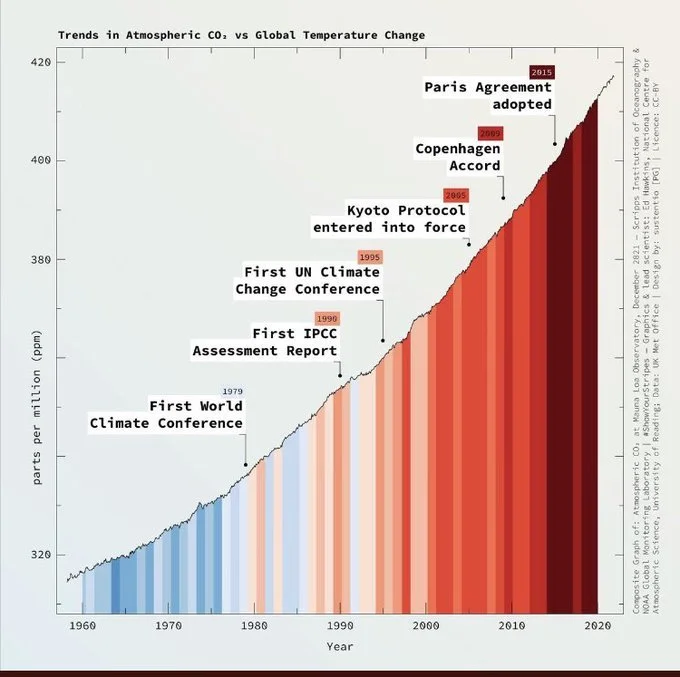
Over the last few weeks I was preoccupied with a convoy of trucks. Now most if the news focuses on tanks and rockets and brave people dying. It’s easy to forget the longer term damage now coming to haunt us, that doesn’t care about how we mess up with trucks and tanks. It deals with how the practices of the first world will affect the two thirds who never enjoy our privileges and now will suffer even more. We have never come to terms with the reality that the planet has a one way irreversible journey and forgetting that impacts our own future - but not fairly. Those who already have the least will suffer the most.
The latest IPCC report still offers a sliver of hope. It’s hard to predict that the first world, already so arrogant and sure of its privilege will suddenly show remorse and change. Our track record isn’t good.
The report is immense in scope - 34,000 studies produced by more than 1,000 researchers and scientists and endorsed by 195 nations. There are things we can agree upon. Here are some of the things to recognize:
Half the world’s population is short of water at some time in the year
One out of three suffers from heat stress. That will grow to 50 or 75% if we fail to act.
A billion people living in coastal areas will be exposed to flooding by 2050
Much farm land is gradually becoming incapable of sustaining crops. A million children in Africa alone could suffer from stunted growth.
Wild animal habitat reduction is causing animals to move and become extninct
We don’t protect land, fresh water and oceans. Instead of carbon capture, we are sending more into the atmosphere.
While the poor suffer most, the first world isn’t escaping. The health of the planet affects us all - physically, mentally, emotionally and spiritually. As the season of Lent begins, we need to grieve our losses, but not stop there. It’s incumbent upon all of us to act individually, corporately, nationally and internationally. The planet isn’t the stage set . The heart of stone must become a heart of flesh.
Learnings

It’s been a busy week. A week ago, the Emergencies Act came into force in Canada to much censure for overreach by some, and a sense of relief by others. I tended to be in the latter group, and felt justified in its results and withdrawal as soon as an emergency in the City of Ottawa was resolved. Yes, - the Provincial Government might have stepped in and solved it. But it reminded me of a board meeting some years ago when a member commented, “I could have done it, just as well or better'‘. and an astute chair replied, “That may be - but you didn’t”.
What the whole thing did do was bring to light how many of our Canadian citizens are ignorant of our country’s history and governance. We don’t have a First Amendment to guarantee their rights. Our constitution does not guarantee life, liberty and the pursuit of happiness. Freedom - FREE-DOM chanted loudly and repeatedly - does not mean that others don’t have rights too - for clean air, theability to move in their neighbourhood without harrassment and feedom to adhere to follow the law onwearing masks. Fox News is not a Canadian network that the majority of our citizens use to get their information. I’d also love to know - looking at the protestors and guessing their age - whether they are aware that they were inoculated or vaccinated as babies and toddlers - Did they ever think to ask about Diphtheria, Tetanus. Pertussis. Poliomyelitis, Mumps, Measles. Rubella, Chicken Pox or Hepatitis B. I think I know the answer, but it would be interesting to know if they do.
It was easy to ignore the growing tensions in the Ukraine and be preoccupied with events at home - but no more. Last week the seminar on Non-Violent Communication came back to mind. What both these events have in common are Faux Feelings - interpretations of reality masquerading as feelings. Among the shared interpretations of some truckers and a Russian president are words like = betrayed, ignored, invisible, neglected, put upon and unappreciated. How they will play out in the larger world conflict we are about to see.