My writings - and those of others.

Removing Alienation

While researching a different subject, I came across this quotation from Thomas Berry. It relates to what we have to learn from our First Nations brothers and sisters:
“Religion, we must remember, is born out of a sense of wonder and awe of the majesty and fearsomeness of the universe itself. . . . At present we are completely encompassed by the world of human artifice.
The alienation from the natural world deprives us of the immediacy and intimacy with the natural world that we observe in indigenous peoples the world over. In their immediacy with the natural wonders of the world about them, these people have an intimate relationship to the sacred as manifest throughout the planet. The world is attractive yet threatening, benign yet fearsome. Divine powers enable fruits, berries, nuts and vegetation to come forth. These same powers bring the monsoon rains and the withering desert winds, the arctic chill, temperate warmth and tropical heat. These experiences evoke in the human soul a sense of mystery and admiration, veneration and worship. This is beyond what is sometimes called nature worship.”
- The Sacred Universe, p. 82
We need to relearn to to encounter nature as a subject to be respected not an object to be exploited. In spite of all we have done to hamper indigenous teachings, they have remained and are being taught to new generations who will honor them.
Better for some

I came across an update of the “If the World were 100 persons” the other day. It is still five years out of date but it was interesting to compare with figures for an earlier period. Here is what they show:
2016 (For comparison purposes similar figures for 1999 in brackets)
If the World were 100 PEOPLE:
50 would be female (52)
50 would be male (48)
25 would be children
There would be 75 adults, 9 of whom would be 65 and older
There would be:
60 Asians (57)
16 Africans (8)
14 people from the Americas (14)
10 Europeans (21)
31 Christians (30)
23 Muslims
16 people who would not be aligned with a religion
15 Hindus
7 Buddhists
8 people who practice other religions (70 would be non-Christian)
12 would speak Chinese
6 would speak Spanish
5 would speak English
4 would speak Hindi
3 would speak Arabic
3 would speak Bengali
3 would speak Portuguese
2 would speak Russian
2 would speak Japanese
60 would speak other languages
86 would be able to read and write; 14 would not (70 would be unable to read in 1999)
7 would have a college degree (1 would have a college degree in 1999)
40 would have an Internet connection (1 would own a computer in 1999)
78 people would have a place to shelter them
from the wind and the rain, but 22 would not (80 would live in in substandard housing)
1 would be dying of starvation
11 would be undernourished (50 would be suffering from malnutrition)
22 would be overweight
91 would have access to safe drinking water
9 people would have no clean, safe water to drink
(6 people would possess 59% of the world’s wealth and all would be American in 1999)
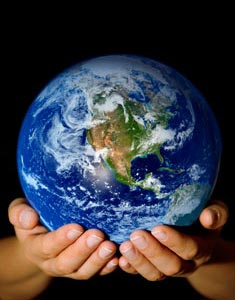
But the important reminder is the map at the top of the page. Those of us who live in the wealthy countries are shielded from the realities of the rest of the world.
True Cost
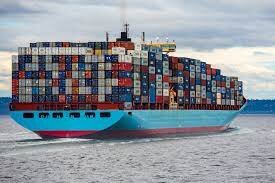
When a cargo ship was stuck in the Suez Canal. we saw many pictures and got a sense of how big these vessels are. They are loaded with containers and we may not think who those containers are carrying and where they are going. Two US based not-for-profits decided to find out.
The study, prepared by Stand.earth and Pacific Environment found that most of the items were headed for 15 major retail companies. Here is an indication of the damage:
“Collectively, the top importers of U.S. goods are responsible for emitting as much sulfur oxide, nitrous oxide, and particulate matter as tens of millions of U.S. vehicles every year. These emissions are some of the most dangerous and deadly types of air pollutants, contributing to asthma, cancer, and premature death, and increasing the mortality risk from respiratory-based illnesses like COVID-19.”
Here are some of the names and the impacts:
“Walmart, for example, was responsible for 3.7 million metric tons of climate pollution from its shipping practices in 2019, more than an entire coal-fired power plant emits in a year. Target, IKEA, Amazon, and eleven other companies were also investigated.”
According to the study, there are 55,000 merchant ships on the water and the number is growing. All of them but one (noted elsewhere as the first electric merchant ship) use fossil fuels. It’s a reminder that our consumer life style does not take the full cost to the atmosphere into account. What is even worse is that the poorest among us are the ones most likely to live closest to the pollution along the shipping routes.
We often feel helpless. But we can tell them we know what is happening and challenge them to deal with it. We can buy elsewhere - and we can buy less.
Ignoring History

I am disturbed when I read the morning paper along with everyone else. Why are people not getting vaccinated, putting themselves at risk along with others? Why are governments now promising to do something about the fallout of residential schools, when the evidence has been in plain sight for so long? Why are some so unwilling to face the truth about the outcome of the US election?
While we fuss about these issues, the historian, Timothy Snyder has some cautionary reminders. In a recent New York Times Article he reminds us that a war on history is a war on democracy. Dealing with the suppression of agriculture in Ukraine in 1932, he notes the suppression of the story of the Ukrainian people themselves - as many as 3.9 million of them died of suffering and starvation. The official story was the triumph of industrialism. Real history was suppressed and rewritten.
Snyder goes on to review the current attempts to rewrite the history of slavery in the US. Suddenly in some states there are new laws of what teachers may or may not say. One of the dangerous elements relates to emotions. Teachers are not to relate parts of the story that some might find upsetting causing “discomfort, guilt, anguish or any other form of psychological distress on account of the individual’s race or sex.”
History, Snyder says, is not therapy. Becoming upset and dealing with it is part of growing up. It’s dangerous when becoming upset could call a halt to hearing the truth. Things become particularly upsetting when it affects groups - white Americans and African Americans, white Canadians and indigenous people or people of colour, respected leaders and things they said and did.
Snyder has strong words for denial. “When we claim that discrimination is only a result of personal prejudice, we liberate ourselves from responsibility.” he says. We have to face reality. Authoritarianism tries to shield us from that. By saying that we are not racist, we may think we have escaped. The only way to change the current situation is to face the past one honestly. That has to happen before anything changes.
Where are We?

As we now apparently are on the verge of space tourism as a future industry, there is more talk of space - why we want to enter it, how much will its cost increase the sense of difference between the billionaires and the rest of us, whether we have just found a new place to pollute. There are larger questions which few are asking or responding to.
Enter Mary Evelyn Tucker who responds to a different question at the Center for Humans and Nature. It poses some of the real questions for our time and invites others to respond.
Tucker starts by noting that evolution is new in the scheme of things - only 160 years old and not something we think about as a concept. We think of the universe as something stable and find it hard to imagine it as expanding. That’s a challenge. She notes that most of the findings of cosmology, biology and humans was not known to our grandparents or even our parents. I grew up thinking that the milky way was the limit. Modern science tells me that the universe is a developing 14 billion year journey and two trillion galaxies exist. But this story has been laced with facts rather than with a poetic sense of wonder.
Science and religion have split as studies, and many have abandoned both in a world using shopping and entertainment to find meaning. Tucker outlines how hard it was for the church to accept a change in the solar system, where humans were no longer the centre of the universe. While scriptural literalism is decried, its creation story is still the one that is fixed in our western worldview. What Tucker suggests is a need for a change of context. She details the experience of mediaeval scientists and their suppression and goes on to outline the experience of modern ones like Einstein, who notes his most serious mistake in not recognizing an expanding universe.
Where does this leave us? She proposes that we see ourselves as situated not just in the world, but in the universe and as part of its expanding diversity - with the gift of consciousness and ability to reflect, not as the pinnacle with the right to exploit it, but as part of its creation with potential. She ends:
“. . .we need an integrated cosmology where science and story are interwoven, where facts and values are braided. As Einstein said: “Science without religion is lame; religion without science is blind.”
The braid is a good metaphor as she reminds us that indigenous people have always understood the cosmos in an intimate way. Read this article - but also read Braiding Sweetgrass.