

My writings - and those of others.


Oh, Canada?
Pro and Con as a country to live in according to DigitalDefynd
PRO:
1. High Quality of Life
2.Multicultural Environment
3.Strong Economy
4.Work-Life Balance
5.Comprehensive Social Benefits
6.Progressive Labor Laws
7.Natural Beauty – Outdoor Activities
8.Career Growth Opportunities
9.Safety and Security
10.Access to Global Markets
CON
1.High cost of living – esp. in large cities
2.Harsh winters
3.High tax rates
4.Few Jobs in some sectors
5.Long time waits for health care
6.Language barriers
7.Job market competition
8.Limited public transit – some areas
9.High student debt
10.Bureaucracy and regulations
And from me having lived here for most of my 89 years:
PRO
· Our Canada Council and provincial arts councils have contributed greatly to our own culture – and have moved to greater understanding of our diversity and supported it.
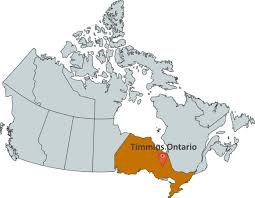
· While most of us live within 100 miles of the next country’s border, we value the whole environment and explore it. Landing in Timmins on a flight to northern Ontario, I could only marvel that it was only half way up the province.
· Our working lives allow for what Timothy Snyder views as the strength of unpredictability. Who would have thought that training as a teacher in 1960 would mean that I was later out of a job in 1980 when the post war babies grew out of adolescence and didn’t need so many teachers. About another forty years later I was in South Africa training a bunch of hotel and restaurant owners in business creativity – even though I never worked in such businesses. I was found online in 1999 by an intern of their association in working in Paris. When i first saw the invitation, I thought it must be a joke.
CON
· All the cons are true enough – but it doesn’t mean we are not aware of them and trying to do something about them.
· Currently the worst one is living next to a predatory leader who was elected by people we thought of as friends.
Several years ago during Canada’s 150th anniversary of its Confederation, Global News, one of Canada’s national services, did some interesting research asking Canadians themselves:
Best things about Canada:
· Nature and the landscape
· The people and their diversity
· Their values
And their worst (somewhat surprisingly)
· Their democracy and government – women and young people more predominantly
· Their food – relating more to no national dish other than poutine.
· Their cities – even though that’s where most people live
Best Progress
· As a great place to live
· Gender equality
· Quality of life
Worst progress
· Political leadership (probably a pair of them)
· Opportunities for young people
· Quality of healthcare
Defining our culture’s strengths
.Social services such as health care
· Tolerance of people of other faiths and ethnicities
· Multicultural diversity
Best country or area to live by Percent - according to Canadians
Canada: 67
Australia, New Zealand, South Pacific: 10
Europe: 8
Central America, Caribbean: 5
USA: 4
UK: 2
And for more fun in terms of stereotypes:
· We like maple syrup and we share it; we are the world’s biggest exporter of it.
· Three quarters of us watch the National Hockey League finals (not me often)
· We do have cold winters. In 1947, the temperature in the Yukon was -81.4F (I did start a car in the 1970s in Western Quebec at -40F
· We say “sorry” more often – because we are polite and other people are not the enemy.
· 15% of Canadians visit the formerly Canadian Tim Horton’s every day. (I’m switching from Starbucks, but all Canadian Pilot is rather expensive)
· When not drinking coffee, we’re more likely to be drinking beer. (personallyI prefer a good Canadian Reisling)
SO – Blame Canada?
I doubt that the US president has read any of our history books. (It occurs to me that I should value our historians more myself and do something about the deficit from my University days when the only history I studied was European, For that matter, it was not possible to study Canadian history I the late 1950s either.) More likely he got the idea of Canada not being a country from South Park here – not a real country. We might just start blaming . . . . And you can see my indebtedness to Timothy Snyder here as well.
Here are a couple of other things that are real right now.
· We’re not a major exporter of fentanyl. The US government says we sent 0.2% in a recent comparison- that is “zero point two percent. Repeating it as the problem by both the president and the vice president is supposed to make it so. It’s a lie.
· We do have a new Prime Minister – who is off meeting the pair of countries that established us as a modern one. Like those of other countries they ignored and damaged people who had already been there for thousands of years. At least we know that now and very slowly are trying to do something about it.
· We’re proudly Canadian and not interested in being annexed. You wouldn’t like us anyway - a second official language – or the fact that our provinces (think states) constantly have different opinions and argue both among themselves and with the federal government. The joke is “Is –( whatever - you fill in the blank here) – A federal or a provincial problem?
· We’re not enemies. But we do wonder what you are doing to yourselves.
· Plans for annexation are not new – but they have never gone well.
Value(s)
Patriotism and Canadian are seldom viewed as synonyms. But here we are. Press us from outside and we realize that we are not American. I lived and taught in New York City in the 1960s and loved being there. I find it hard to realize what a different country it is now. I also grew up in an industrial city – Kitchener, Ontario, whose economy at the time was primarily manufacturing. Its twin city, Waterloo, was seen as less prosperous. The situation totally reversed in the digital revolution where its university and tech start ups made Waterloo a San Francisco of the north. But it didn’t produce any billionaires who decided to run the country.
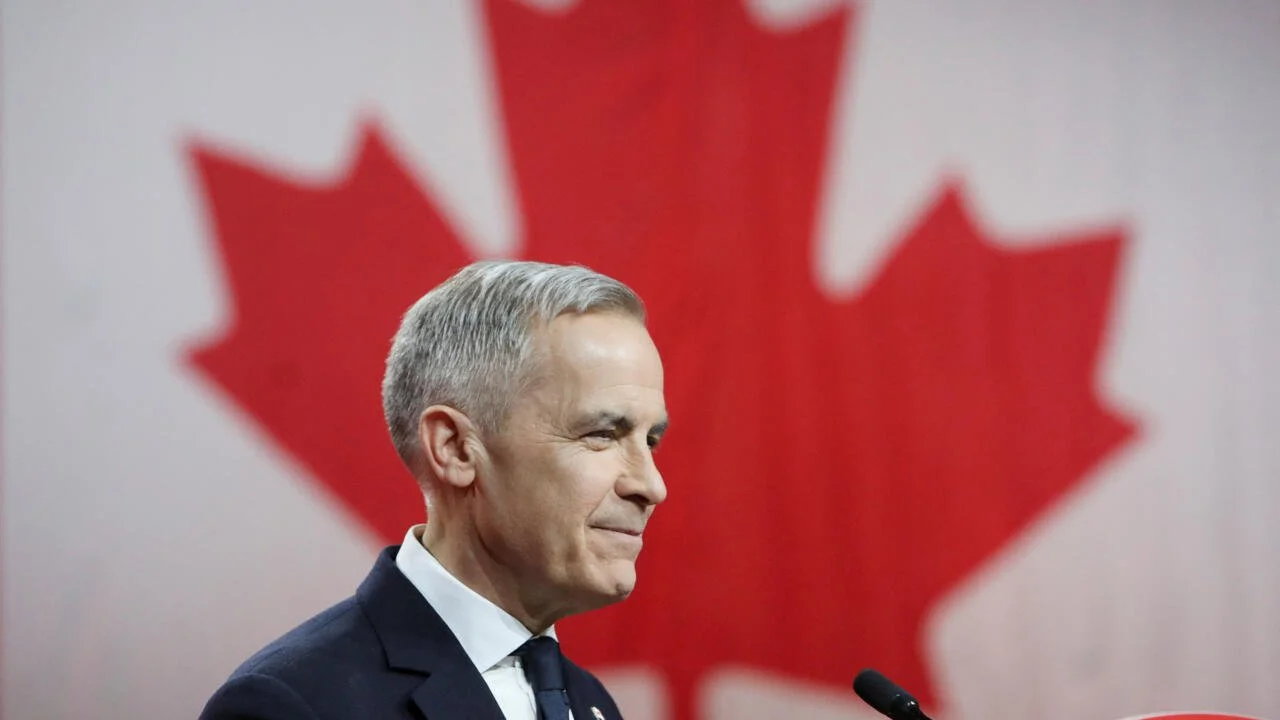
What makes us different? We have our own polarizations - -usually conflicts between federal and provincial powers. We have several political parties, which means we often have minority governments that need at least one other party to support them. The US president has given us an unexpected gift of recognizing that more unites us than divides us. Tomorrow on Friday March 14, we will have a new prime minister and a new federal cabinet.
The new prime minister wrote about value and values during the pandemic. It might be worth noting what Mark Carney said about his own values in a book that explained economic understanding of monetary value but also human ones:
“Growing up, I learned from my family, neighbours, friends and our country the values of integrity, responsibility, solidarity and hard work. I gained an appreciation of our cultural mosaic and enjoyed opportunities to engage in my community and serve our country. Like others, I have drawn on Canadian strengths in public education and healthcare and I have been raised in an environment where leaders must force a consensus toward a common vision and then take principled disciplined action.
For those gifts I owe a great debt to our country”.
As do we all.
Notes:
Carney, Mark. Value(s) Building a Better World for all. Penguin, paperback edition, Random House Canada, 2022. Originally published by Signal, 2021.

On the North Shore
A wise person suggested that in times of chaos, “Try not to get swept away by the river; it’s better to stay on the shore”. I can look out my window from a high floor and see the shore of Lake Ontario. On a very clear day I can sometimes see the US faintly on its other side. In the barrage of news that beams out anger and fear, one of the things that I regret is not knowing more Canadian history. In tenth grade, the history teacher suggested that we could remember the terms of Canadian Confederation by the acronym, LACEFUR. Lace-Fur is easy to remember to this day, but I haven’t a clue what the letters stand for.
But I can look it up!
Doing a little research doesn’t give meaning to the acronym, but some facts help. The British North America Act came into effect on the July 1, 1867. I grew up calling it Dominion Day - because it united three of the five British North American colonies into a federal state – Nova Scotia, New Brunswick and the province of Canada (later divided into Ontario and Quebec). Six other provinces were added later to make ten along with three territories. What also prevailed were British and Canadian statutes that have the effect of a constitution.
Powers were distributed between Parliament and provincial legislatures. Each has named authorities. Some of those for Parliament include banking, criminal law, the postal system and the armed forces. It also included the “Indian Act” the original nations of people who were present before the settlers arrived. (We have unfinished work to do on that one). The provinces had authority over property, contracts, local works and businesses. Naturally conflicts arise over powers and new ones have to be dealt with going forward – radio, aeronautics, official languages – don’t forget that Quebec was a French colony originally. We have had to deal with emergencies, health care and pandemics like the rest of the world.
Canada grew and like other members of the British Empire wanted more independence. In 1931 the British Parliament’s Statute of Westminster put its Dominions on an equal footing with the British Parliament
On December 11, 1931, after decades of negotiations between Britain and the Dominion, the British Parliament passed the Statute of Westminster, which put the Dominions on equal footing with the British parliament. It also now recognized the monarch as head of the country. In 1960 the Canadian Parliament passed its own Bill of Rights. But there was also a desire for its own constitution. It made several attempts to get provinces to agree and there was also a move in Quebec for greater independence. After many meetings. submissions, and presentations, the Canada Act 1982 was recognized by the governments of the United Kingdom and Canada, which ended the amendment power of the former.
This bare bones summary presents some background information to counter the stupid ones in the news. Canada is a country like the United States of America. It has a Federal Government and Provincial ones, as well as Territorial Governments, it elects members to both bodies. A Prime Minister leads the government. Premiers lead provinces.
It’s a big mass of land:

Here are some comparisons:
Canada is the second largest country in the world, second to Russia
Quebec is three times larger than France and comparable to Texas or California.
Ontario is about the size of Germany.
British Columbia is comparable to Spain.
We’re a nation of immigrants. In Toronto, our largest city, half the people living here were born elsewhere. And that makes us a better place.
I could go on. But here’s the thing. Naming a country or a prime minister incorrectly is not only brazenly insulting, but phenomenally stupid. Predatory talk will not work with us. We are seldom under attack, thank goodness, but when it happens, we remember who we are. Don’t mess with us.
Sources: Government of Canada. Wikipedia, Natural Resources Canada. Painting: Lauren Harris

Speaking out
As a resident of Toronto -and an Anglican, I have an excellent Bishop of Toronto who sends us his weekly newsletter that is personal, inciteful, and thought provoking. This week he tells a story of being spoken to by a stranger, who recognized a clergyman’s collar and she remarked, “We need to hear more from people like you”. He notes some of the hazards of being dressed this way:
“ Over three and half decades of ministry, the uniform has elicited a whole host of responses from folks sharing the sidewalk, traipsing through the mall, riding the subway and visiting the hospital. I am sure that my colleagues who don the collar share similar experiences. Some walk by without seeing. Some nod and make gestures of respect. Some notice and then look away. I have had a pedestrian see me coming and cross the street to avoid me. I have had a person or two spit on me and make rude gestures with their middle finger. And I have had folks stop and ask me to pray for them or a family member. But I can’t remember a time when a stranger in a restaurant said, We need to hear more from people like you.
This is typical of what we hear and it is an admonition to us all, including those who don’t wear a clerical collar - as Anglicans, as Christians, as citizens. I’m reading a lot of “Ain’t it Outrageous’!!” from the opinion press this week, and it’s not hard to agree. It was good to hear a former US Ambassador to Japan say, “I’m ashamed”, after he saw what a US president and vice-president did to humiliate a brave man, who not only spoke up, but for three years joined his country’s men and women to stay and fight. Those former two aren’t just small schoolyard bullies. They have power to exercise. Their values are pretty obvious. Power to dominate is all that matters. I liked it when Andy Borowitz characterized the meeting as “Zelenskyy Meets with Russian Agent” because as yet another Bishop, Desmond Tutu, realized long ago in South Africa, that laughter is often the only defense for the powerless. I also liked the the satiric article’s ending. “Vlod, you kicked his ass!” said Bishop Budde.”
That’s the Bishop who got under the president’s skin. He knows exactly what she is saying. He knows there are other values than his that matter. He knows that other people have them and embody them - and that they are admired for seeking justice and mercy long after they are gone. He knows that some people will not be defeated. no matter how much he wishes to bully them. And he must be very afraid.
Most of us are not fawning, but still - what are we doing? “Nevertheless. she persisted” became even more famous with Sen. Elizabeth Warren was speaking up, and I started in writing this as, “Nevertheless, she protested”. So I’ll protest:
Dismantling government is wrong. Private freedom depends on public governance to ensure accountability
Humiliating people in public or in private is wrong. It’s also stupid, because it demeans both parties to the communication.
Giving up on long term friends is wrong. Trust is easy to dismantle between people and countries and very difficult to regenerate.
Thinking that more money or more power will make you happier is wrong. It won’t. Trust me. I’ve been around for more than eighty-nine years.
And there are things that I am free to do here and now.
Enable good government - by voting, by commending good actions to elected and appointed persons in an system of governance and questioning actions that appear harmful.
Treating all person I encounter with respect
Valuing long term friends. I like Timothy Snider’s suggestion of writing one letter a month to someone I care about.
Spending and conserving all resources wisely and noting the effects of what I do upon others and upon the planet.
That will keep me busy enough - and away from social media this week.

Puzzlement

There were myriad criticisms of a former president after that one awful debate. I watched only a small part of of it and concurred with the media view that this person was no longer fit to be president on the basis of his performance. But it might be fun to turn the tables. What if Mr. Biden said “I’m going to fire as many people as I can”. Or “ I think it would be great to turn Gaza into a beautiful seaside resort.” or even “How about Canada becoming the 51st state!” The hue and cry would be that the poor man was delusional or just plain crazy. If he had continued to declare that he had always been effective in his job in government, we would have at least surmised that it was too bad, but he wasn’t in the same position any more.
I just wonder if the current incumbent actually thinks he is just in a previous scenario - being able to yell out, “You’re fired”. Or he is channeling the old real estate developer role. Government isn’t a TV series or a real estate company. No one seems to be pointing this out. Acting out of context brings some pretty serious consequences. Will anybody wake up?