
My writings - and those of others.


A worthy successor to St. Francis
“If we consider that emissions per individual in the United States are about two times greater than those of individuals living in China, and about seven times greater than the average of the poorest countries, we can state that a broad change in the irresponsible lifestyle connected with the Western model would have a significant long-term impact.”
Pope Francis Laudate Deum 2023.

Imagination deficit
I’ve enjoyed listening to Adam Gopnik read from his book, Through the Children’s Gate, written some years ago, after he and his young family returned to New York City from Paris - not too long before the horror of 911. The children are grown up now, but the author brings them to life in a way that is charming and revealing for as long as readers continue to meet them.
At age three, his daughter Olivia developed accounts of her interesting imaginary friend named Charlie Ravioli. The parents listened to long telephone calls on a toy phone that somehow revealed the patterns of their own New York lives. Charlie was usually too busy to play or grab lunch. He was constantly in meetings. Eventually Olivia had to try to connect with Charlie through an administrative assistant - something of an anomaly in the world of imaginary friends. One day there was a surprising report that Charlie had been married - to a woman with an exotic name, that made her sound like an African princess. And even more surprising sometime later, there was a report that the wife had died. What did she die of, the parents asked. The answer was Bitteroscity.
Gopnik goes on to say how Bitteroscity afflicts us all - resentment, disappointment, jealousy, A good word indeed. How will we escape it? Probably the answer is Olivia’s. When we are three, we can imagine a really interesting world and pick and choose elements of the real one to create something totally new. When we’re decades beyond three, we lose our ability to imagine something better in the real one. We spend most of our time on the screens and social media of a digital one.
The next time you go to Twitter or Facebook, check out how you really feel as you exit - more imaginative, more inspired, ready to think of something to create a better future - or more envious, more exhausted, more jealous, more depressed, My guess is that Bitteroscity has more likely hit home. There’s a remedy for that. We all know what it is.

Edges
Edges
A project I have been working on is concluding – a written report with recommendations. My volunteer role on this one has been that of recording secretary, though I have worked on similar projects as a consultant, and it reminds me of why consultants exist in the first place. There is some degree of truth in the cynical definition, “A consultant is a person who borrows your watch to tell you the time”. In my own experience, working with clients who wanted to build a cultural center, the client was full of ideas, but had reached an impasse. Their RFP to the prospective consultants told them what to provide next, though if they knew that, why did they need consultants? The senior one on my projects had wide experience and knew that the real task was to forge a deal among a variety of stakeholders to make it happen. The missing elements of the dream were the funds. Much of the job was re-educating the clients to the needs of their finished product – design ones, that they had never considered. In a theatre for example, the lobby and backstage each had to be bigger or comparable in size to the auditorium. Bar sales in the intermission often generated more revenue than ticket sales.
In applying the framework to organization change instead creating of a building, the client wants something better, but also doesn’t know how to get there either. Describing “better” very often means a return to a past with better memories. This has been particularly true after the pandemic with a “Make our organization great again” but ignoring the current context. Sometimes that’s easy to correct via demographics and other cultural changes within the broader context. Nearly all organizations swim in their own environment – sometimes feeling guilty at their lack of success without realizing the changes in the wider world over which they have little control.
One of the remedies in the 20th century was polling, without recognizing how polling suggested how things were going to end, and influenced choices before individuals made them. In the recent exercise this became translated as listening to as broad a membership as possible. They participants were given a chance to meet on Zoom, in contrast to a previous one where surveys were the form of polling, though surveys were used as well. Those in charge of the process were so inundated with data, that they soon had to hire another person to make sense of it – which almost sounded like an assignment for AI. Instead, the data was carefully coded to find out what views rose to the top. As someone well versed in interpreting data, she was helpful in warning of unrealistic expectations in what was hoped for and did an excellent job of showing why it was untenable. In my own reading of the raw data of the Zoom sessions, I noticed a reinforcement of what early participants identified as a problem. It was easier to agree than to offer dissent.
In the course of history, group opinion matters a good deal, but the initial formation of something new often happens at the edge. One person offers something interesting, and it is ignored by the group. If the consultants already have a plan as to how they want a study to unfold, they will also commend the unusual but then dismiss it.
I’m sometimes on the receiving end of the study as well as the strategic side and I’ve offered something on the edge, I used to feel hurt when my idea gained no traction whatsoever. But I’ve become more patient and learned to smile when I see a revolutionary concept or model shot down. Often a seed gets planted when even one person picks it up and shares it. Years later, the idea or model re-emerges to gain traction and the seed becomes a bright new thing to be planted; it grows. The later adapters take all the credit of course, but that’s all right. The importance is that the new model is born and is alive and well. We shall wait and see what happens on the next round as to whether the interesting idea takes root.

Undiplomatic
António Guterres came to the job as Secretary of the United Nations after, among other things, serving as the Prime Minister of Portugal. Usually such leaders learn to be diplomatic. As Bill McKibben observes, he abandons when it comes to talking to fossil fuel providers on climate change. Here are some examples:
“We must end the merciless, relentless, senseless war on nature.” He adds
We need disruption to end the destruction.
No more baby steps.
No more excuses.
No more greenwashing.
No more bottomless greed of the fossil fuel industry and its enablers.
Your core product is our core problems.
Among his fellow straight talkers are Pope Francis Al Gore and McKibbon himself. But my local daily newspapers didn’t join them this weekend. There were marches all over the world, including Toronto asking for the end of fossil fuels. The morning news today contained nary a story nor a photo in print or on screen. Our own party leaders seem not to be undiplomatic - but silent. It’s small wonder that the young roll their eyes at us,
Innovation
I’m off for a two day planning session where a consulting team will be meeting with the people who will later have to implement the proposed strategy. It was fortuitous that I read of an innovation lab that had some effective ways of measuring how much change people were ready for. You can find more about the Center for Youth Ministry here. Much of what they are saying applies to any organization dealing with change.
These were the things they are measuring on a continuum to try to assess how ready a group or organization is for change. In each case, the word on the left means not ready and the one on the right indicates readiness:
The mindset:
Fearful ______________ RISK RESPONSE ___________________Hopeful
Closed ________________INPUT_________________________Open
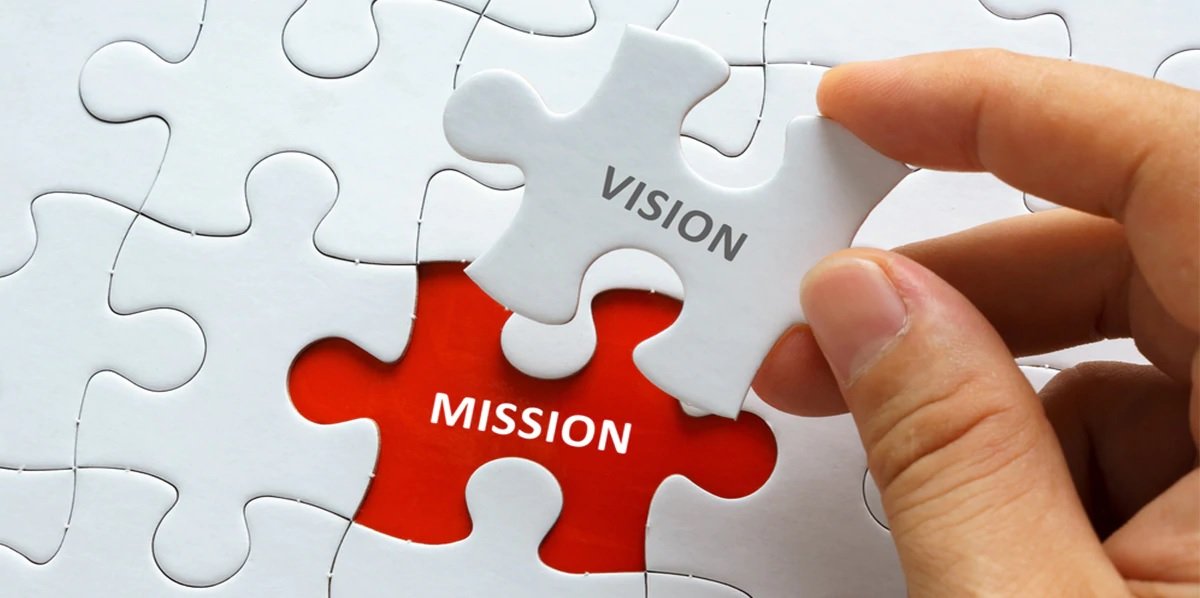
Survival ________________VISION ___________________Fulfilling the mission
The Structure:
Closed ________________ENVIRONMENT________________Playful
Bureaucratic____________COMPOSITION ___________________Adaptable
The Relationships
Isolated_______________CONNECTIVITY __________________Interwoven
Suspicious_________________BONDS ____________________Trusting
The Habits
Delaying _______________IMPLEMENTATION _______________Enacting
Reactive ________________Experimentation _______________Proactive
Good food for thought here for any organization. The Center offer testing and analysis which could be useful in a range of situations.