My writings - and those of others.

Meanings

We used to say “climate change” - a fairly unemotional term that didn’t suggest much beyond differences in weather in different locations. Many of us were even hard pressed to know the difference between weather and climate,- including a certain defeated president - but then the media shifted to “global warming”. What we are hearing more often lately are words like “emergency” and “catastrophe” - and rightly so. We need to feel threatened if we intend to do something about it.
Remember “greenhouse effect”? We don’t hear that one any more. Linguists like Todd Ehresmann at Babbel, which checks word usage, points out that “Global Heating” would get our attention as an accurate description now. Activists have helped increase the intensity of the language. That’s helpful because scientists are often cautious knowing the media will exaggerate their claims to sell products through fear - not to arouse the best in us. It’s good that activists lobby for the proper degree of accuracy - and that media watchers like Babbel ensure that we take responsibility for the changes that are happening.
Gratitude

I’m cheating by one day to try to post twice a week - but the last week was a busy one. As the American Thanksgiving weekend winds down and the news that Black Friday online shopping was lower than in previous years, perhaps we are discovering that being grateful is more satisfying than acquiring more stuff. In fact a recent article written by a physician and published in Fast Company backs that up. Here are ways to be ensure it. Nearly all religions and philosophies tell you the same things:
Be thankful for the beauties of nature and its constancy. The sun rises and sets each day
Compared to other living species we have been blessed with consciousness.
Good conversation enlivens us.
Love and encouragement of friends and family assures us.
Giving thanks in the morning and evening reminds us of how fortunate we are.
Writing thank you notes reinforces our gratitude
A journal allows us to record the good things that happen.
Seeking experiences rather than just buying things gives us pleasure.
Making gratitude a habit helps us through sorrow and challenges - so that we can remember that there are other good things waiting for us.
Teachers

It is quite wonderful to discover an interesting character in a novel and then find that it is based upon the life of a real person. In this case it is Suzanne Simard, who appears in Richard Power’s The Overstory.
What she has discovered after years of forest research, and its dismissal by other scientists, is that trees in a forest, like people, have relationships - and one tree may act as a protector of other younger ones. We can learn from the forest’s wisdom. We know that people use networks; what she has found is that there are similar patterns in the plant world. In the same way that thoughts and feelings are hidden within our unconscious, there are similar ones in the plant world unseen and underground.
I’ll le her speak for herself here:
COP 26 - the Takeaways

These are the key points of agreement after two weeks of COP26 conferring.
Fossil fuels were named in the final report for the first time. The young were furious when language was weakened, but the words were at least used, if watered down. Now that the need to reduce their use is on record, no matter how weakly, a new degree of accountability can begin.
A fund for loss and damage is not included. This, of course is terribly discouraging for those who have been the most damaged by fossil fuel use in the richest countries. Some of them are already under water.
A 1.5 degree target increase still exists - but in a less than adequate way. Projections of actual results based on current realities and the announcement of actual future plans lessen the possibility of it happening.
The timelines for report national results are higher. That, at least, is good news. Most countries want to have good reputations and there are now better methods to separate results from aspirations or as Greta would say, blah, blah, blah.
The young are awake and aware. One hundred thousand of them were present for the conference and many of them were not old white men, but young women of colour. The young are getting older, will have increased influence and they are not going to depart from activism any time soon. Politicians who want to be re-elected need to take note.
All in all, some progress, but there is still a glaring need to speed things up. Let’s hope the young people keep on the case, and inspire the rest of us to support them.
Playing with Words
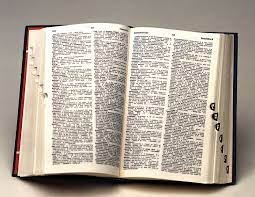
As I wait for the final results of COP 26, I have to find something else to write about to end the week. I am taking a course online and the subject yesterday was “Interiority” - not a word that I ever use. That sent me on a search which I posted on the course site - and I’ll share something of it here:
I'm going to have some fun with words. I became curious about the term, "interiority", because before starting the course - or perhaps before reading Thomas Berry - it was not part of my everyday vocabulary. Canadians, like me, straddle both British and American English. I started with the hard copy of my Concise Oxford Dictionary published in 1982. The word wasn't there. I moved on to Collins British dictionary online to find this: "the quality of being focused on one's inner life and identity". If the Oxford English Dictionary had allowed me to see when the word first entered the language, I would have gone there, but there is a paywall. Collins did help with a diagram. It showed brief use for the first time in 1778 - 0.07% - and then the word languished or fell off completely until 1978 when it took off at 0.33% use. But that’s not a very big number either.
I moved on to the American Merriam-Webster. It had this to say: Definition of interiority
1: interior quality or character
2: inner life or substance : psychological existence
When we are little kids, using big words gives us a sense of authority and superiority - and it also makes us part of an in-group. For me, one of the challenges of Berry’s New Story - is telling it in words that other people understand. "Story" is a simpler word. For more fun, I went back to Collins and tried translating story into French, German and Italian. In each case it brings up a native word in the language histoire, Geschichte, storia. When I tried the same thing with Interiority, this is what came up - intériorité, Innerlichkeit, Interiorità. The German seemed to have a better word of their own. The others sounded as though they adopted the English one.
When we watched Robin Wall Kimmerer this week, several in the course commented on her warmth and simplicity as it comes through in the sound of her voice and her demeanor. It's isn't as though she can't use big words when she chooses to. I've just finished two of her books, Gathering Moss and Braiding Sweetgrass. Her naming of mosses reveals a scholar who can joust with any biologist and win hands down. For me, interiority has a cold and rather scientific sound - like an empty and sparsely furnished room. But this playful research brought a phrase that I can work with - "inner life" - because it sounds as though it comes from the wisdom of the heart. It still combines an adjective and a noun. To spur myself and others to act, I have to turn a phrase into a verb. The video for this section of the course on the global brain with the outline of the human body is also a big help in showing us what it means to live - both inside and outside our skins.
A good teacher once heard a student say, "I feel very creative". The teacher asked "So what are you going to create?" "Oh I didn't mean that I was going to do anything about it. It's just how I feel today".
That's why I never use the word "creativity" either. But "create" is a verb I like.