
My writings - and those of others.

Predictions

“To cherish what remains of the Earth and to foster its renewal is our only legitimate hope of survival.” -Wendell Berry
Are you tired of news hosts asking everyone they interview what is going to happen - especially relating to re-opening after the pandemic? Those interviewed are always put in a double bind. If they urge caution, they are met with comments about how tired we are and how unfair it is. If they predict good news they are immediately met with fear that things are moving too quickly.
The truth is - we don’t know what will happen in the future. “We never did and we never will.” Wendell Berry was asked a similar question when asked to deliver a talk on the Narrative of the Future. That was his response as poet, farmer, and lover of earth - especially his home locality in Kentucky. While reminding us that scripture urges us to have no thought for the morrow, that might also be a problem.
The first thing we might do instead, he says, is to look at history for lessons. The evil that is sufficient for the day does indeed play out tomorrow. Remember the lack of preparedness in 2010 for a pandemic that was raised and never acted upon. We have paid for it now.
A second thing is to appreciate the day we have when our pains and losses are minor ones, Not everyone is so fortunate. Losing a loved one to disease is not the same as being deprived of going to bars. Time moves in one direction. What are we doing with our days?
We can’t predict the future. But we can provide for the future. To do this, we recognize the choices we make today have consequences and have an impact on our own future and the other creatures we share the planet with.. While climate change demands a big solution according to many, Berry says it seems so big that we have to keep moving that solutions further and further into the future because it seems so gigantic. The thinking about solving it also become political with views that range from drastic to futile. We propose policies - and argue about them
How will changes in policy affect the climate of the futre. We don’t know. What does matter is not policies, but principles. Changes in principles, Berry says, can be made now by as few as one. Small solutions do not have to wait for the future. He suggests that rather than trying to save the world, maybe we could start to live savingly. Among the options I remember from the second world war was the rationing of fuels. Governments could do it then without question- but so can we now- one by one. It’s only one small example, but we can choose others and learn. The best lessons about frugality are taught by the earth itself.
Eating Fish

Netflix has recently issued a documentary outlining how we are exploiting the fish supply. Many who watch it are becoming like vegans and giving up fish altogether. I’m trying to each less meat and more vegetables and fish often seems the right choice. Thus I am encouraged by Guardian and New York Times writer Paul Greenberg who allows for four types.
Farmed oysters, mussels and clams. - because those that farm them, have to abide by clean water rules
Alaskan Sockeye salmon. - because preserving their habitat meant that an Alaskan copper mine never happened.
Peruvian anchoveta - because if you can find it, it isn’t being reduced to pellets, as so many industrial fish are.
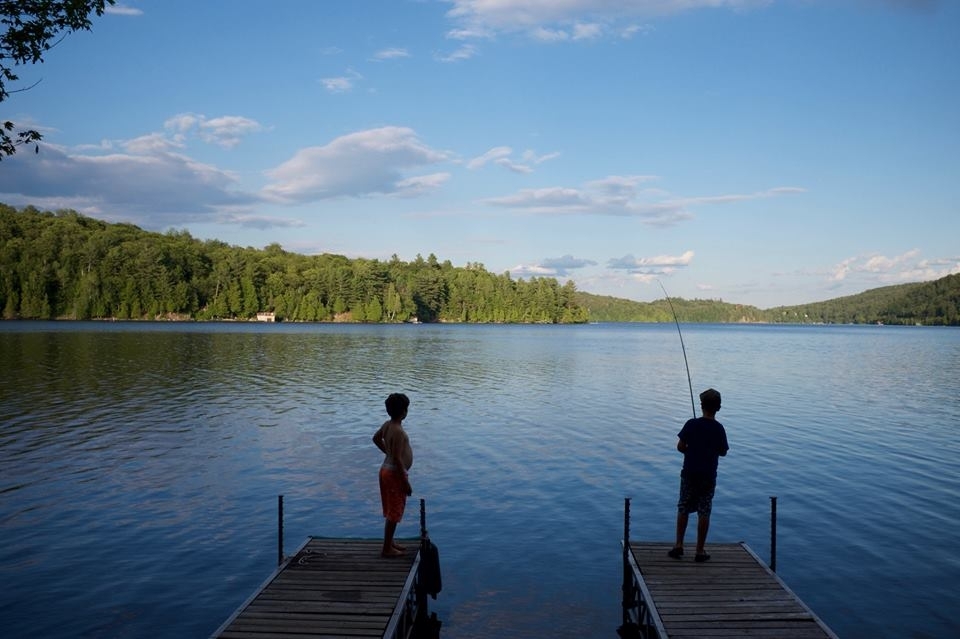
Fish I or a family member catches -n a fresh water lake. I loved fishing from a rowboat accompanied by my father when I was a child. It was a time of calm and companionship - but moreover it was a sustainable kind of fishing. We kept only the perch, bass or trout that met size requirements. We went home or to the cottage, cooked it and ate it. We were mimicking the Georgian Bay patterns of the first nations people who lived there before we settlers came.. To pretend that anything we eat - even vegetables - doesn’t depend on the resources of our planet home is foolishness.
Taking responsibility

How often have read that as individuals we must take our share in reducing fossil fuel use - drive less, use fabric grocery bags and the like. But who are the serious polluters?
How about BP, Chevron, ExxonMobil and Royal Dutch Shell. It was no secret to these companies as early as the 1970’s that their products were contributing to global warming. They continue to be subsidized by governments around the world. Their executives are awarded large bonuses even in the midst of a pandemic.
The real question is - when will they stop exploring and drilling. It’s important to note that many of the oil and gas companies are now switching to plastic production. Twenty firms according to a recent article in the Guardian produce 55% of single use plastics for us to buy. They can then conveniently blame us for the waste they bring into being.
As Bill McKibben says - “Don’t they have grandchildren?” He goes on to quote Sally Weintrobe,a British Psychoanalyist, who says. “The uncaring part wants to put ourselves first; it’s the narcissistic corners of the brain that persuade each of us that we are uniquely important and deserving, and make us want to except ourselves from the rules that society or morality set so that we can have what we want. “Most people’s caring self is strong enough to hold their inner exception in check,” she notes, but, troublingly, “ours is the Golden Age of Exceptionalism.”
Climate and Weather

Beautifull spring days here in Toronto mean that people like me are bringing up cushions from the storage locker and enlisting younger family members to wash balcony windows to enjoy the coming season. It’s easy to confuse weather and climate.
But the study of norms is sobering. It examines patterns over time. I don’t know whether there are similar Canadian statistics, but the National Oceanic and Atmospheric Administration of the US Department of Commerce publishes norms each decade and a new one was recently released. Comparisons between previous temperate climates and current warming ones are scary
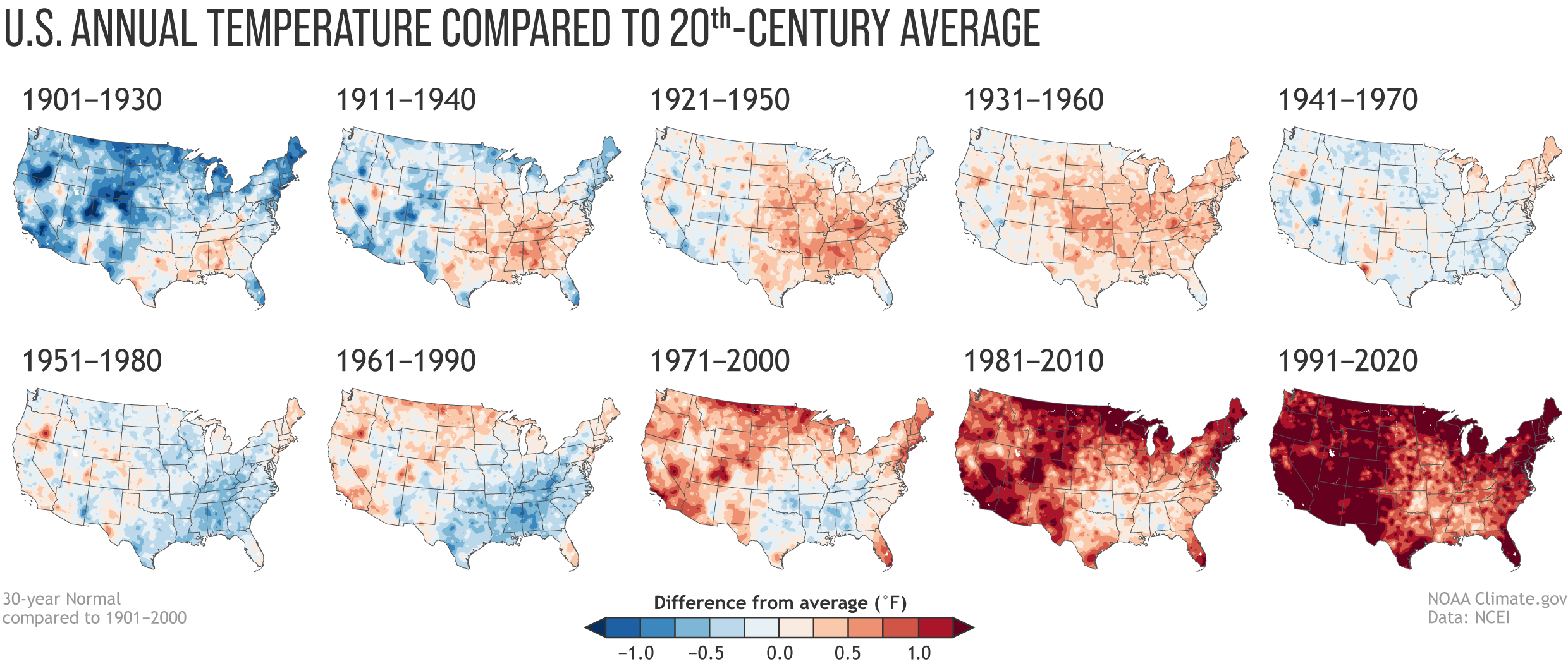
This is what industrialization and other human action is creating. Look what we are doing to ourselves.
Past and present

I went back to piano study three years ago. In some contexts I don’t mind being called the longest continuing participant rather than the oldest - but the second is clearly the honest description here as the oldest student. After yesterday’s practice, I was moved to reflect on what I saw in front of me from the piano bench - pictured above. Today I grabbed my phone, took a picture after pulling down the blinds to block the sun - not totally succeeding - sent the photo to my laptop and here it is.
Above, there are pages from a mediaeval psalter. These came as a wedding present in 1960 from family friends who found the pages in an English antique shop and had them framed. Many such books were hand lettered and illustrated in the middle ages by monks - and it’s possible to find the English texts of the Latin inscription. It seems amazing that such books were simply cut up and its pages treated as a commodity. But here they are - treasured artifacts.
Moving down it is obvious that this instrument is not a concert grand. Instead, it is a Roland electronic of reasonable quality. The headphones make it possible to practise at any hour without disturbing neighbors in my apartment complex. On the sides are standards for practice of any pianist at any level - Bach easy preludes and Hanon exercises.
What is perhaps most interesting are the printouts in the centre. This is a work by Joseph-Hector Fiocco, a composer I had never heard of until I looked him up. A Belgian composer who lived from 1703-1741, he was a composer and harpichordist of the late Baroque period who also knew enough Latin and Greek to be a school teacher as well as becoming choirmaster at Antwerp Cathedral. Obviously a versatile and talented guy -as the little gem of a piano suite proves.
What would he think of the way I received this score? I printed it out on an inkjet. In the middle of a lesson, my teacher had asked if I knew the work - and on receiving a negative reply, on the spot she sent the score from her Iphone. The composer’s free scores are available from the International Music Score Library Project.
There are so many awful uses of technology, with people spewing vitriol into the universe and illustrating the worst of human character. It will take incredible effort to curtail the power of transmittal of ugliness and lack of caring. I’m as liable to the quick flippant comment as anyone. But it is good to remember the capability of transmitting beauty and quality with ease. That is where we have to go.