
My writings - and those of others.

Values and strategies

Continuing on the report of Climate Action.
These are the values that the Alberta study found need to focus upon in engaging young people. While they were specific, they also have broader application.
Security - learning needs to suggest that climate changes and the actions we are asked to take bear a relationship to a predictable future.
Achievement and self direction - a desire to learn the skills to build the world they want to create.
Place attachment - focus on the locality where students live and love.
Continuity - young people want to see new energy initiatives create the prosperity that former ones did.
Responsibility and agency - Young people realize that the future is theirs - and they are prepared to take responsibility for it.
The study noted that only a small number - 10% - dismissed the reality of climate change. Building on the previous studies of Alberta adults, these are the narratives that are seen as relevant to teens
Love of locale (in this case, Alberta, but the same could apply to any province or region.
Early adulthood - high school students are the next generation and are eager to take responsibility for their world.
Climate - it will be challenging to talk about when parents’ employment or family history has depended upon fossil fuel industries. This must be a starting point. We do have to talk about it and recognize climate science based facts. It also helps to face the fact that we have overcome hard issues in the past by facing them realistically and honestly
Energy - Clean energy solutions are under development. There have been energy transitions in the past and we have survived them.+
Student perceptions

Continuing from the Climate Outreach Study, here are some of the findings from workshops with Alberta students on energy and climate change.
When adequate education is missing, students develop negative narratives about energy and climate change and literacy on these subjects is missing.
They feel overwhelmed by the issues
They are more than happy to talk about it. There was enthusiasm to take part in the workshops
They value their provincial natural environment
They want to know more about the connections between energy and climate change - but in a way that is action oriented so that they can make a difference.
They see effects in their own local communities and this can be used as an opportunity for education
Many of the words used around climate change - like pollution, waste, climate, energy were used in an imprecise way. These contribute to confusion.
Younger kids focused more on nature’ older ones were more aware of social and political issues.
Not surprisingly, older students were far more concerned about their future.
Most students obtained their information from social media. The study notes that the impression from these sources are often “Dystopian” and “Catastrophic” accounting for an increase level of anxiety.
Older students are more aware of debate and disagreements on these matters ranging from households to local, provincial and national levels.
Young voices matter.

Climate Outreach is a UK based charity with a team of social scientists and communication specialists working to broaden public engagement with climate change. One of their recent projects was a study of the attitudes and perceptions of young people in Alberta. There are probably view places in Canada where there are more divergent views than this Canadian province, whose economy is heavily dependent on oil and gas extraction. The pandemic has only increased the anxiety of young people nearing the end of their secondary school education and their younger siblings also have concerns. Both groups combine high aspirations for change and are also subject to misinformation. You can find out more about Climate Action and their resources here.
Young people observe changes in the natural world. They also receive confusing narratives through social media. Their parents and teachers may have their own anxieties about what is going to happen in their province which makes conversations difficult - especially at any age when young people want to become independent in their world views - and these are already challenging times. What will their lives be like in terms of future work and life style?
After surveys and workshops with both middle school and high school students, this report has many good findings and recommendations than apply to a broader audience. I’ll note a few and continue with others over the coming days. They start with principles for educators - which can include both family members and teachers.
Acknowledge that we are all anxious no matter whatever are age
Build climate literacy. This needs to be the focus
Learn about all forms of energy and how each contributes to climate change
Make the conversations relevant to the issues in the lives of students - future education, job choice, lifestyle options.
Know the real values of the students and relate the conversations to them
Images matter. Find good and relevant ones to make the point
Develop the right vocabulary and use it consistently.
Make the science relate to practical hands on skills that students can practise.
Respect family backgrounds and the views that they may present
Ensure that resources are up to date since these are changing rapidly.
These are good principles for learners of any age. More on this will come soon.
Musings

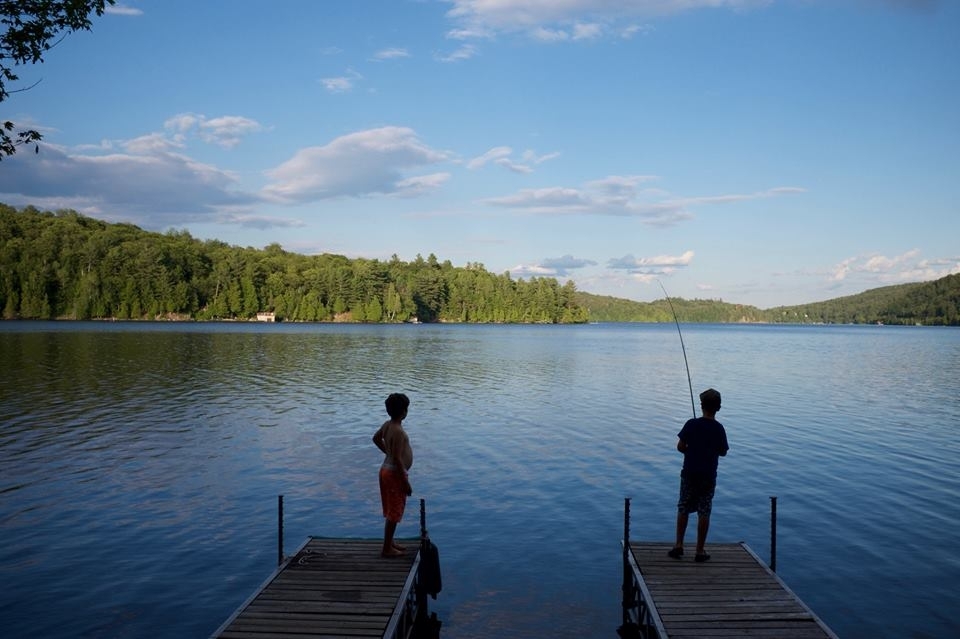
In spite of ignoring social media lately, I liked this image that a son recently published on his personal news feed. There were some flat earth indications on other things I have read recently.
The admirable EcoChallenge is sending me Thirty Days of Readings on Systems thinking with daily articles and videos. I intend to learn more from these and undertake a a study of a recent organizational situation that has gone badly to see whether there are lessons to be learned using this approach. But there are also connections with the flat earth thinking and other recent readings that I can make immediately.
Fareed Zacharia writing his weekly column in the Washington Post and also presents it as an introduction to his weekly show on CNN. His interviews are excellent and the introduction is worth a watch for its own sake. He asks:
“The current Republican congressional delegation includes people who insist the 2020 election was stolen, have ties to violent extremist groups, traffic in antisemitism and have propagated QAnon ideologies in the past. At the state level, it often gets worse. Mainstream Republicans have tolerated these voices and views for years. Can the party finally find a way to control them?” He goes on to say that in any political party or institution what has to be controlled is the outer fringes of the organization.
On Saturday, I read that there was a protest in Edmonton against Covid-19 health measures. It involved hundreds of people starting from Lethbridge. Global News noted:
“The protest was organized by the “Walk for Freedom Alberta” group. That group claims to stand up for rights and freedoms and “peacefully promote breaches to our civil liberties across Alberta.”
The Mayor of Edmonton protested the protesters by noting that the pandemic is not a hoax and that some behind the protest may be connected with known hate groups. Canadians can spare any self righteousness when we view our neighbours to the south.
The theme of supposed unfairness continued this morning (Feb. 22) with and article in the Globe and Mail reporting on a defiance coming from a western church congregation. While many churches with limited reopening in Ontario have noted that there was not a single case of infection, the article begins with a story about a small church in Saskatchewan. On Christmas Eve 15 people gathered for an early service with all the proper precautions in place - and no masks, no singing. But afterwards one sick person discovered that more than 12 had contracted the virus. In Edmonton, a pastor remains in jail for opening his church in contravention to restrictions. His attorney is trying to make the case that that freedom of religion is more important than public health.
Public health has also led to similar conflicts in British Columbia. The Provincial Health Officer, Bonne Henry, argues that services of worship unfortunately have elements most likely to cause the spread of the virus. These are gatherings of people from different households - over an extended period of time, held indoors in buildings often with poor ventilation and activity can include singing. The congregation is also likely to contain elderly persons with pre-existing conditions. It’s a recipe for high risk - and that’s why I avoided any such opportunities in Ontario when live services still existed. I administered a registration system for one and was startled to see who wanted to attend - primarily the highest risk group. Perhaps they just didn’t care whether death came sooner or later.
Yes - sometimes rights are infringed upon. But it’s difficult to see a small number of people championing their own rights above those of a broader community. Generally Canadians see things differently than their American cousins and I find it depressing to see individualism topping (I refuse to Trumping or former-guying) society as a whole. I can understand making comparisons with bars or restaurants in Alberta - but why not advocate for their sharing concern for the common good by closing until it is safer.
When it comes to common good, there was better inspiration in the Globe’s business section with an article on leadership where Mi’kmaw educator Marie Battiste was interviewed. She is a retired professor from the University of Saskatchewan, an honorary member of the Order of Canada with four honorary doctorates and many other citations.
Her current research asks us to think historically and aims to assess the teaching of our history sad history of the treatment of first nations peoples and how to improve the teaching of indigenous knowledge. Here are some of her insights:
Understand your own skills and talents and how you can use them to best understand and serve your purpose.
Indigenous ways of life embrace a more holistic worldview, anchored in the understanding that we are all interconnected.
When we understand how we are related, we better understand our obligations and responsibilities to one another, to the earth and to the seven generations to come.
My father wrote a family history which told us of more than seven generations past - and part of that story is one of our white privilege in spite of many hardships along the way. I commend this wise indigenous leader’s reminder of our role in learning the truth in assessing our science and our society. A long view shows us the importance of the systems of which we are a part and the ones we determine.
Saving the Planet according to Bill

I am at least somewhat inspired by the fact that one software billionaire decided to resign from operating his company and putting his money to work on the most critical issues of our time. Even he is mystified by the conspiracy theories that have resulted from his work in virus development and prevention. His medical student daughter who has received the vaccine says that unfortunately it didn’t contain the microchip so loved by the conspiracy crowd that might make her as smart as her dad.
Bill Gates has written a book about how to save the planet and several reports have summarized some of the steps. Here are seven of them where we need to send a message:
Advocate for governments to support research and development in clean energy technology if and when the private sector refuses to do so. That’s how we got to where we are with modern technologies - government funding
Level the playing field of production costs of carbon use. Both the actual producer and consumer needs to pay for it. Otherwise we all do.
Ensure that the right information is available to home owners and landlords re upgrades. That’s a government responsibility to know and communicate.
Ensure that government keeps up to date with building standards and mandates the best construction policies.
When communities transition from fossil fuels and jobs are lost, respond that governments respond with financial help to ease the obvious pain that the changes bring.
Ensure that government policies work on the big things - not just the small stuff.
Take a coordinated approach to technology, policy and markets. It’s not as though they aren’t all connected.